How Connected Bluetooth Weighing Replaces Manual Entry With Accurate, Context-Rich Field Records



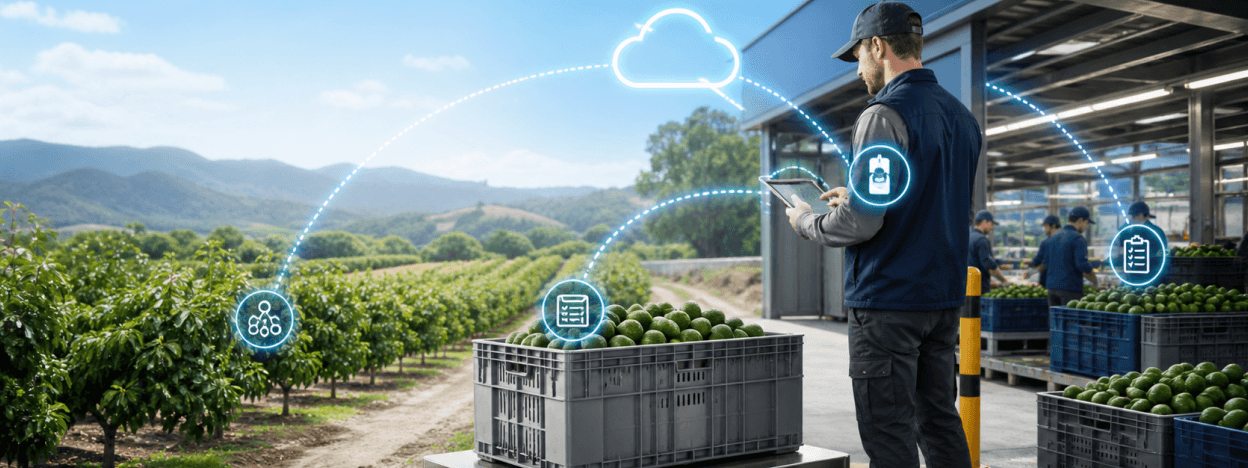
A scale reading becomes operationally valuable only when it is connected to the correct worker, task, container, and timestamp. Manual transcription slows the process and creates avoidable mistakes.
We built a mobile weighing workflow that connects to Bluetooth Low Energy equipment, monitors device state, captures live readings, applies task and employee context, validates events, stores them locally, and synchronizes results for reporting.
The solution brings measurement and context into one guided experience, helping teams move from isolated weight readings to dependable production intelligence.
The Challenge
Field weighing often combines specialized hardware, changing crews, reusable containers, tare values, and inconsistent connectivity. If operators must copy readings by hand or switch between systems, errors and delays increase.
Teams also need visibility into connection status, battery condition, stored devices, legal-for-trade prompts where applicable, and exceptions that could make a weight record unreliable.
Our Solution
The workflow discovers and stores compatible BLE devices, manages connection callbacks, displays live weight, and guides the operator through employee, task, and container selection. Validation checks help prevent incomplete or inconsistent records before they enter the operational history.
Local persistence and synchronization support offline-first work. Summary and data views make it easier to review activity, while setup and administration screens keep equipment and workflow configuration controlled.
The workflow is designed to make complex operational technology feel simple at the point of activity. Operators follow a clear sequence, while supervisors and system owners retain the configuration and visibility needed to manage the process at scale.
Key Features
Some of the key features provided in the solution are:
- Device Discovery using Bluetooth Low Energy
- Real-time scales reading with device and battery state information
- Context of Employees, Tasks, Lists, and Containers
- Tare-aware configurable weighing operations
- Event validation before the acceptance of record
- Local database with synchronization and structured export of the same
- Support for USB Events on suitable configurations of the equipment
- Daily report generation for Employees, Tasks, and Captured Data
These features, collectively, enable a reliable digital process workflow.
Benefits for Field and Packing Operations
Using a purpose-built mobile workflow provides several operational advantages:
- Eliminate repeated manual transcription of scale readings.
- Improve weight accuracy and record completeness.
- Reduce time spent pairing devices and recovering connections.
- Connect every accepted weight to meaningful operational context.
- Continue work when cloud connectivity is limited.
- Create better source data for payroll, yield, productivity, and traceability reporting.
Rather than relying on memory, handwritten notes, or disconnected devices, teams receive a structured process that supports faster work and more dependable decisions.
Benefits for Weighing Operations Managers
Managers responsible for mobile weighing need confidence in both the measurement and the operational context attached to it. The workflow helps them:
- Monitor which scale, employee, task, and container produced each accepted event
- Reduce transcription errors caused by copying values from scale displays
- Review unstable, incomplete, or rejected measurements before reporting
- Standardize tare handling and device setup across mobile weighing points
- Recognize recurring pairing, battery, or connection issues affecting throughput
- Provide cleaner weight data to payroll, receiving, yield, or inventory processes
The management benefit is not simply faster weighing; it is a more trustworthy measurement record that can be used confidently by downstream teams.
Built for Mobile and Distributed Weighing Points
Bluetooth weighing is useful when measurements are taken away from a fixed workstation and must immediately inherit operational context. Common environments include:
- Orchard or field-edge stations weighing harvested containers
- Receiving areas capturing incoming product without manual transcription
- Packing operations measuring batches, totes, or finished units
- Temporary stations where equipment must be paired and moved between sites
- Locations requiring tare-aware records for reusable containers
- Remote facilities that must retain weights locally until synchronization
Device discovery, connection feedback, stable measurement capture, and event validation work together to turn a standalone scale reading into a usable operational record.
Supporting More Devices and Measurement Workflows
Additional scale models, communication protocols, tare profiles, container classes, and measurement rules can be introduced as equipment fleets evolve.
Accepted weights can later feed payroll calculations, receiving records, yield analysis, inventory updates, or customer-facing transactions according to business needs. This creates a reusable measurement layer that can move from one mobile weighing use case to several connected operational processes.
Planning to Connect Scales to Your Operational Data?
If employees still copy readings from a scale display into paper or another device, we can connect measurement capture directly to the relevant worker, task, container, or lot.
We can evaluate your BLE hardware behavior, stability signals, tare requirements, validation rules, offline conditions, and downstream data interface.
The outcome is a weighing workflow designed around your equipment and operating conditions rather than a generic manual-entry screen.

 Facebook
 Linkedin
 Instagram
 Youtube
 X
X